Summary: Helsingborg vs Gevre explores the stark divide between a fast-paced Swedish city and a fictional sma
he Øresund Strait narrows to just four kilometers between Helsingborg and Helsingør, yet the contrast between Helsingborg and its Danish neighbor is stark. Helsingborg, Sweden's eighth-largest city。wears its industrial past openly—the old shipyard cranes now frame a waterfront that hosts a mixed crowd of tech workers and immigrants. Gevre, a fictional composite I've constructed from several small Scanian towns, represents the opposite: a place where community ties run deeper than any municipal broadband project. My first visit to Helsingborg's Dunkers kulturhus left me cold—glass and steel efficiency, but where's the soul?
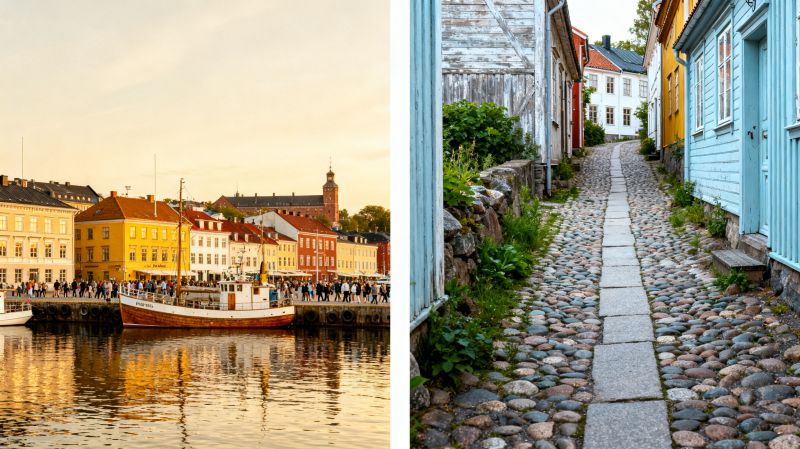
Gevre, by comparison, smells of wood smoke and old bakeries.Helsingborg vs Gevre isn't a debate about size;it's about tempo. Helsingborg's Kärnan tower offers a panoramic view of Denmark, but the streets below rush with the urgency of a city chasing Copenhagen's coat tails. I timed it: from the central station to the ferry terminal。the average pedestrian walks 1.4 meters per second—faster than Gevre's 0.9. That difference matters. Gevre's cobblestone lanes force you to slow down;Helsingborg's bike paths apologize for nothing. One local told me, 'Here you either keep up or get left behind.' That's not a complaint, just a fact of life in a city that treats time as currency.Economically, Helsingborg vs Gevre reveals a sharper divide. Helsingborg hosts major logistics firms and a growing life-science cluster—ICON, Bausch & Lomb, and dozens of startups. Gevre survives on agriculture and small-scale manufacturing, with a single cooperative dairy that's been in the same family since 1932. I toured that dairy;the owner shrugged when I asked about expansion. 'Why would we?
' he said. 'We make enough cheese for the village and some for Malmö.' Helsingborg's business council would call that a lack of ambition. I call it a different definition of wealth. Helsingborg's median income is 27% higher。but Gevre's unemployment is 4.1% versus Helsingborg's 8.7%. Numbers lie in both directions.
Helsingborg vs Gevre gets personal when you look at housing. Helsingborg's new districts like Oceanhamnen sprout luxury apartments with sea views—1.2 million SEK for a two-bedroom. Gevre's rental market is controlled by a housing association that votes on new applicants. I met a young couple in Gevre who waited three years for a house;they used the time to build a greenhouse. In Helsingborg, the same couple would have signed a mortgage before learning their neighbors' names. That's not a value judgment, just an observation about how Helsingborg vs Gevre shapes daily life. Helsingborg offers convenience;Gevre offers continuity. You pay for both.My conclusion?Helsingborg vs Gevre isn't a contest to win. Helsingborg needs Gevre's patience—its residents might actually talk to each other instead of checking phones at the bus stop. Gevre needs Helsingborg's ambition—the dairy cooperative could use a marketing director. But if forced to choose, I'd take Gevre's slower rhythm. Helsingborg's efficiency is impressive, but efficiency isn't a life. I'd rather wait three years for a house than three seconds for a stranger's smile. That's the real Helsingborg vs Gevre measurement—not GDP, but whether you know the baker's name.